
02 · En-Chanting Pheras
Musical Pheras
Profound chants · explanations · singing. The most sacred moment of a wedding, finally given its soundtrack.
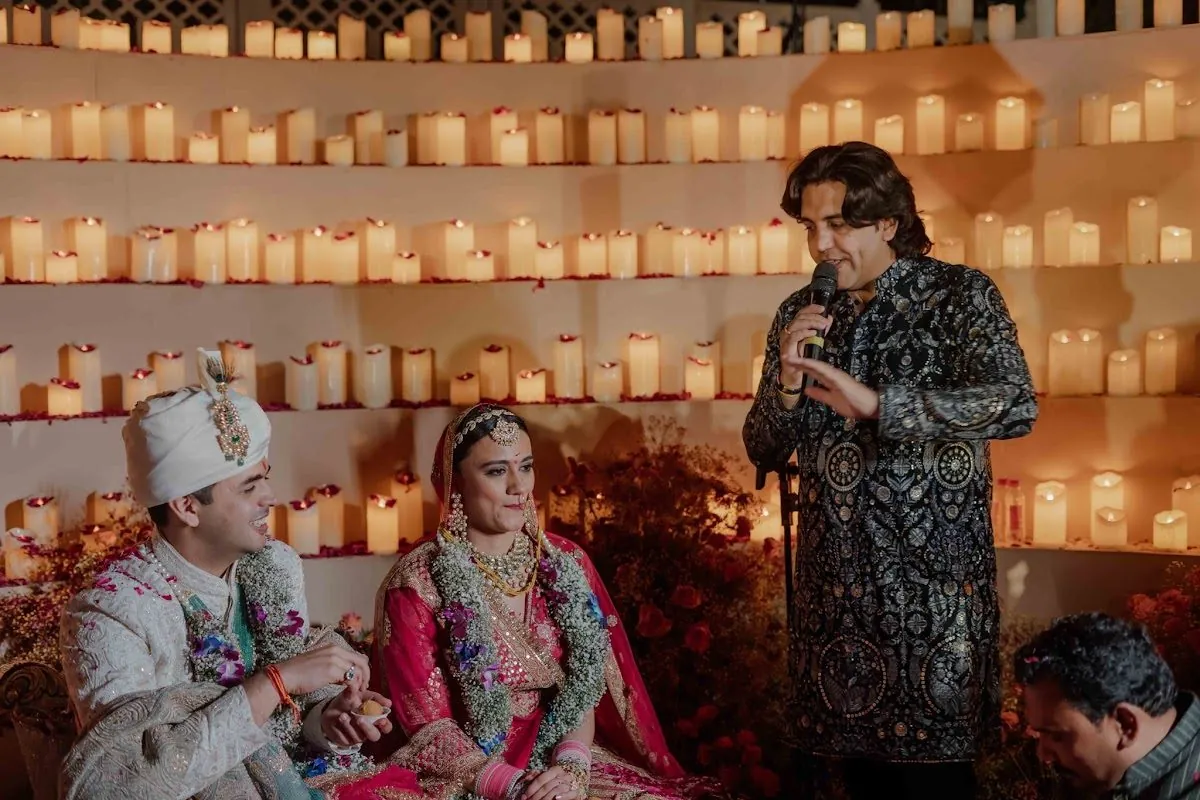
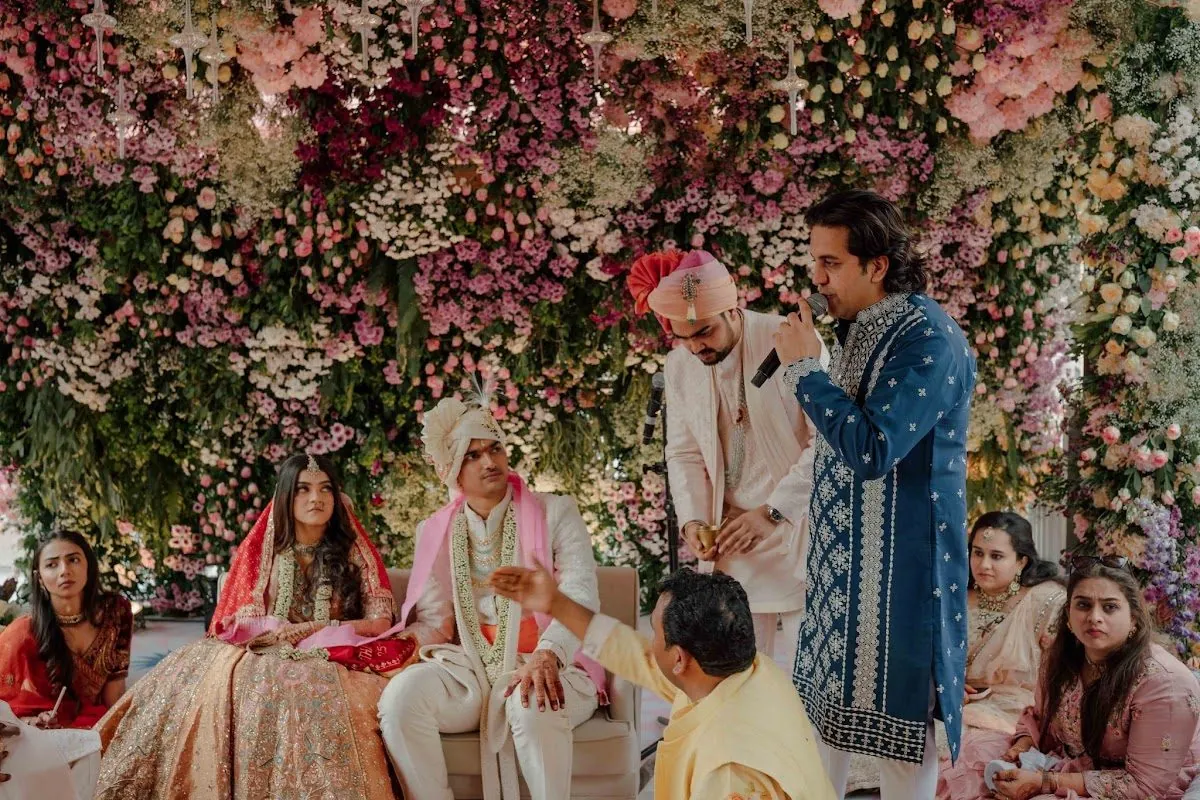
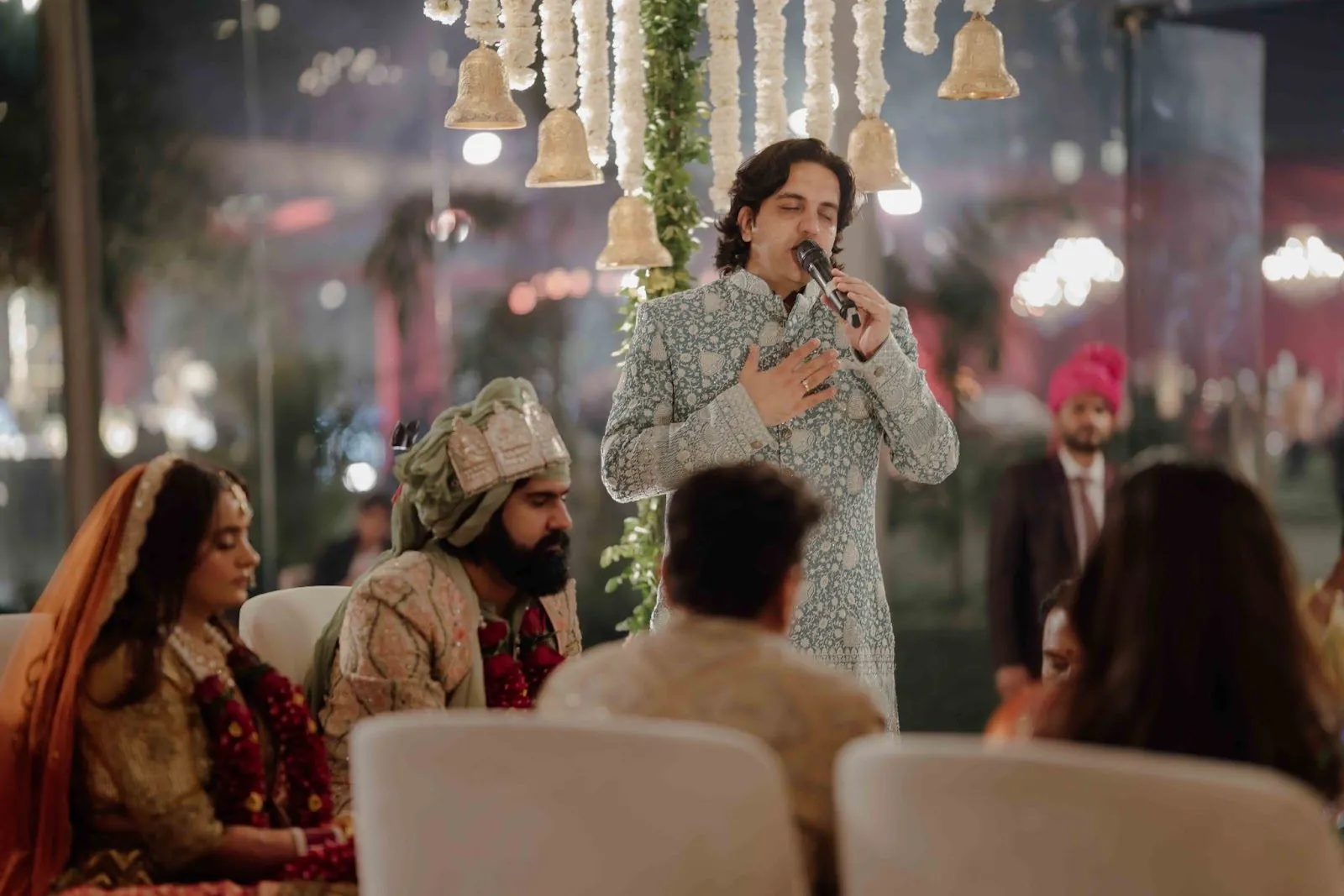
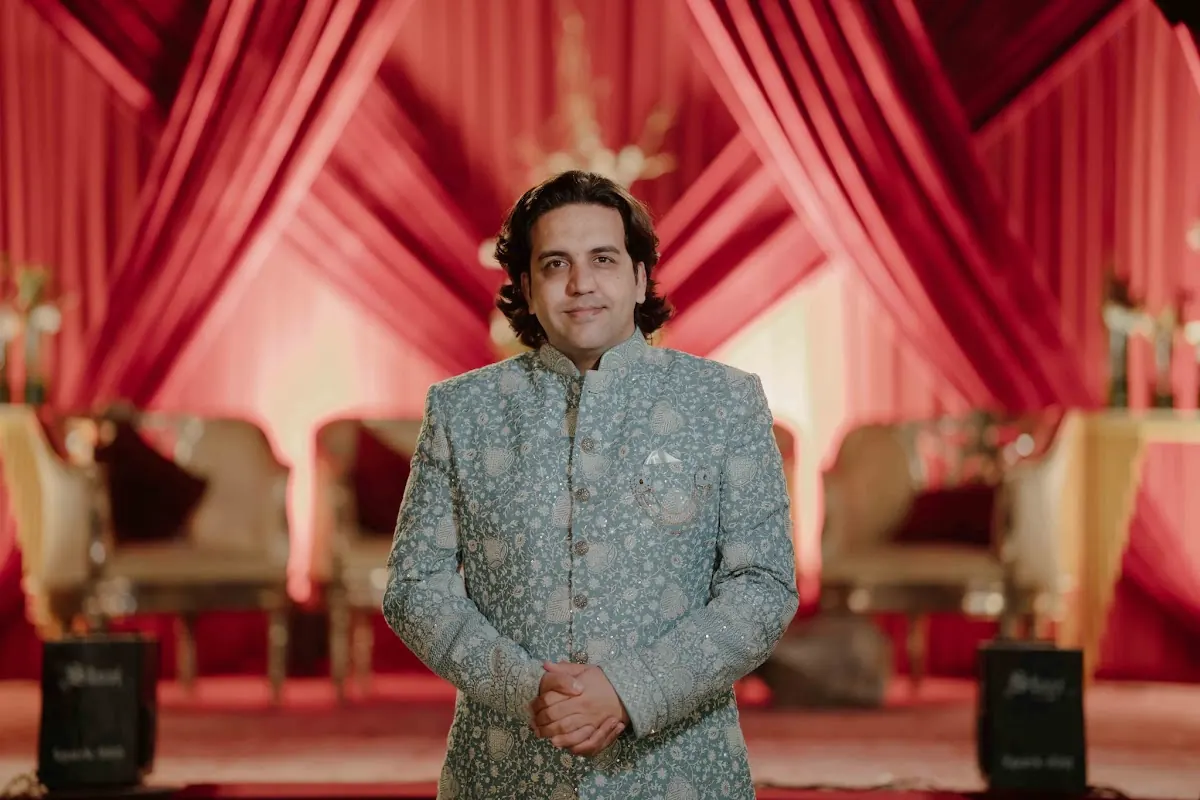
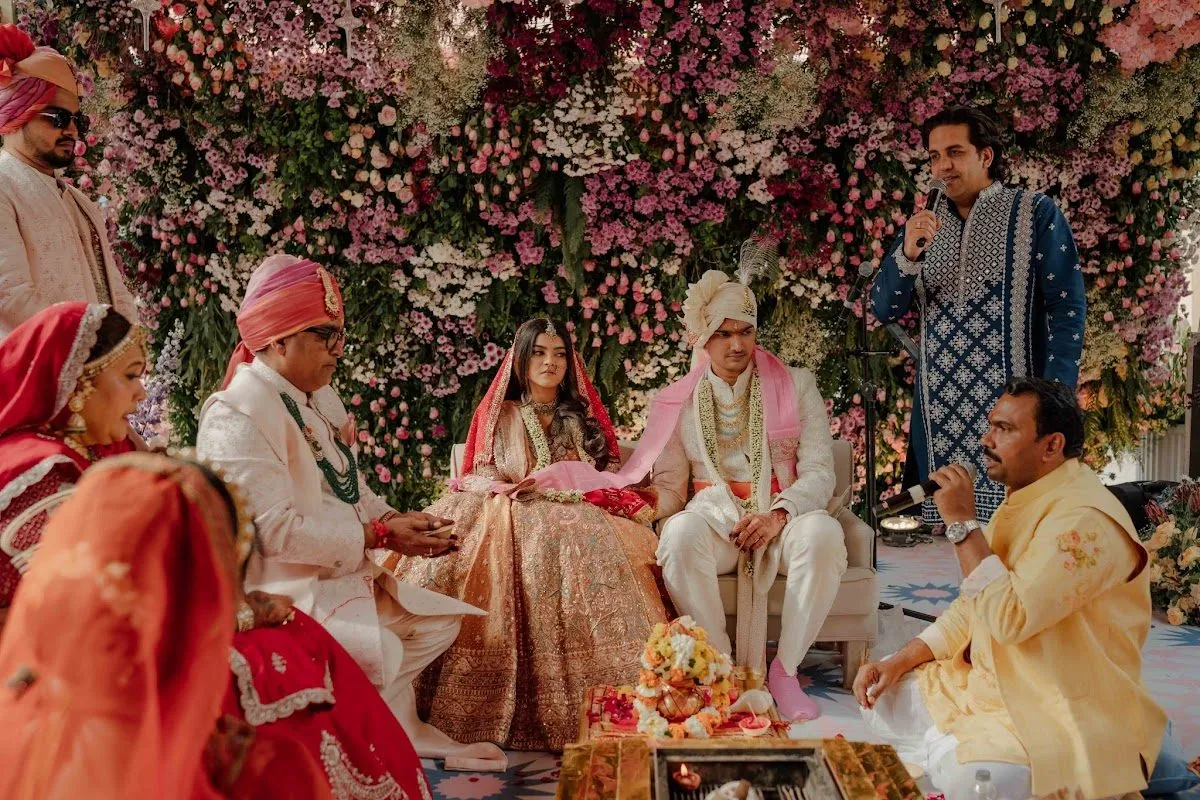
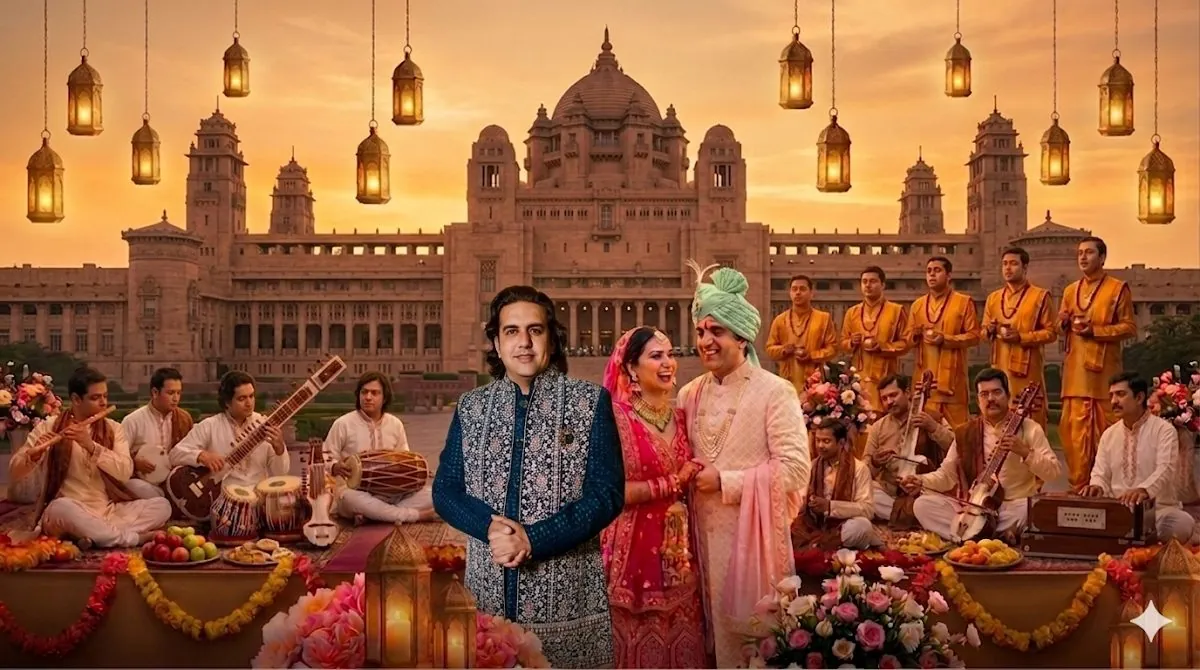
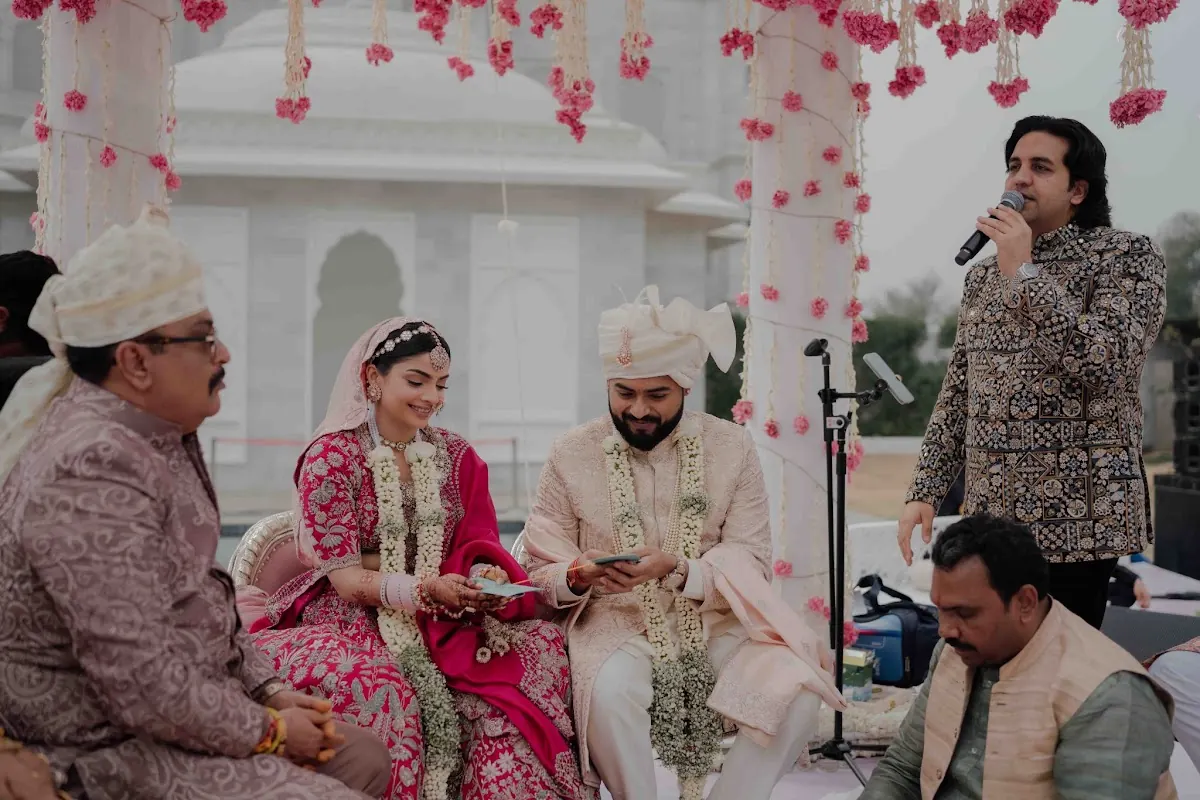
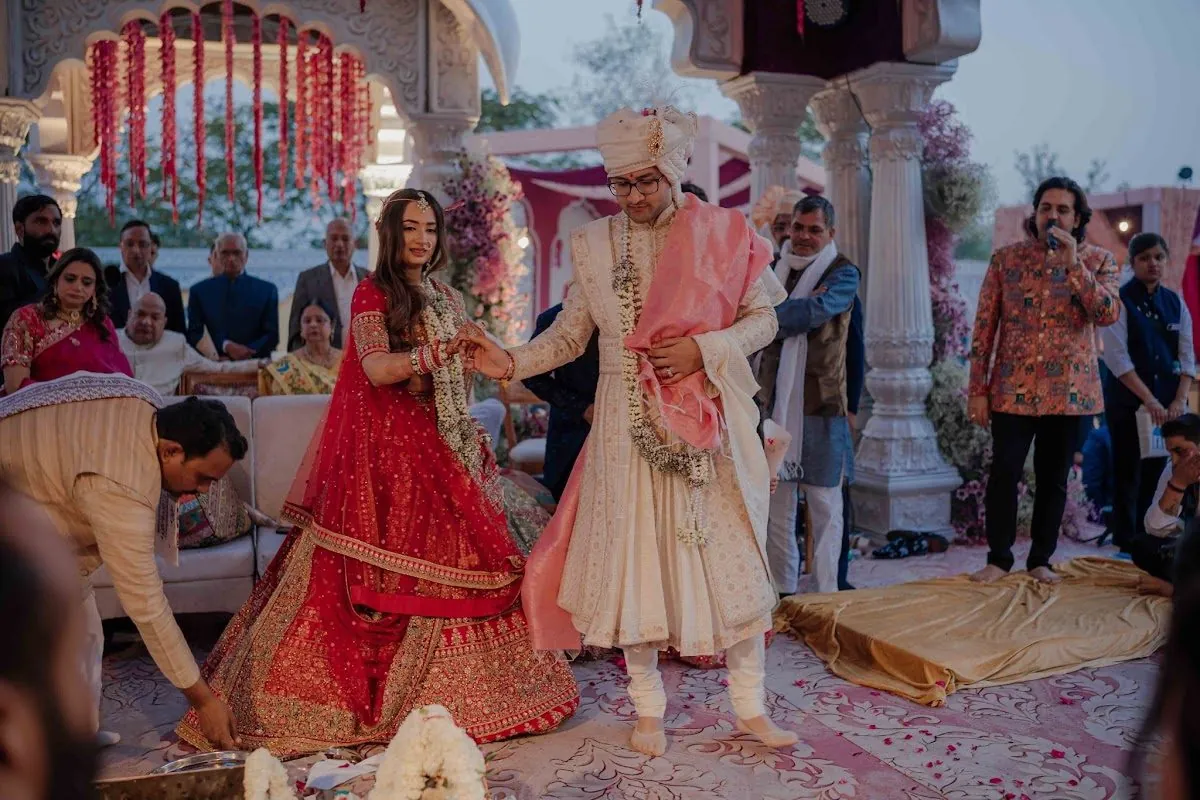
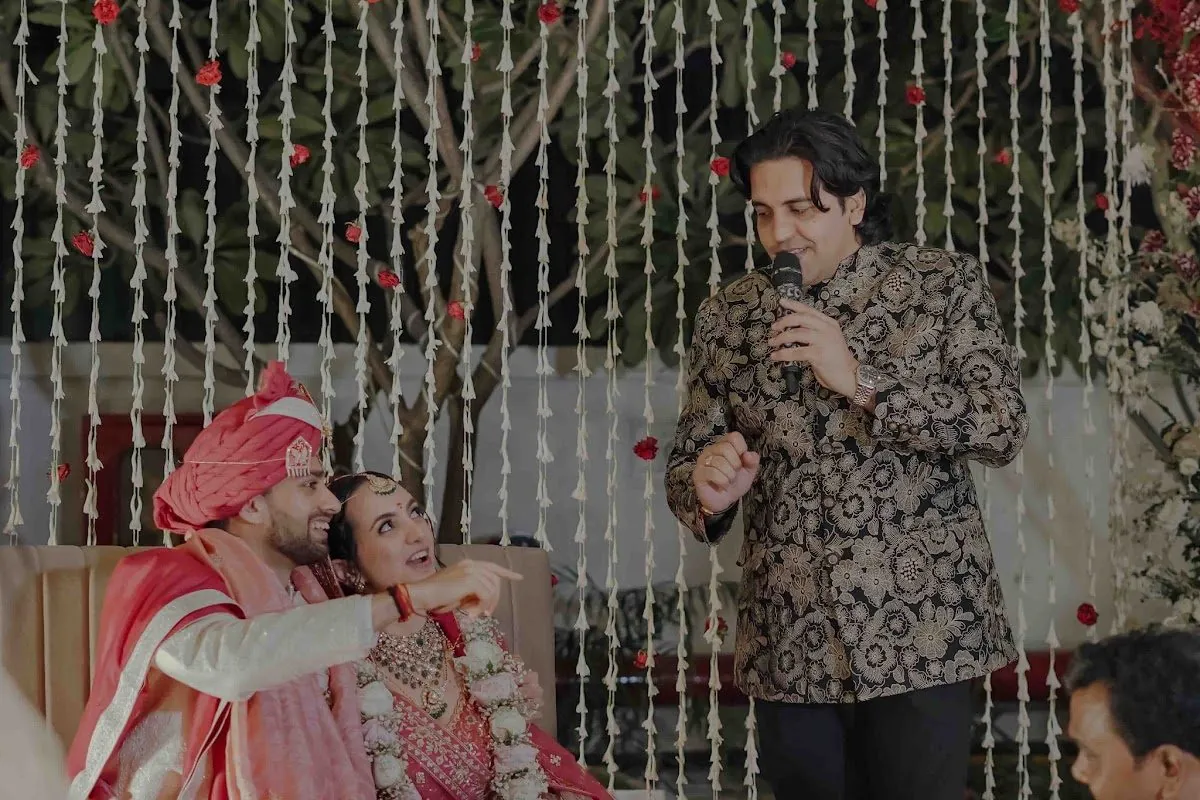
The pheras are the heart of an Indian wedding, and the part most often reduced to a formality. En-Chanting Pheras restores them: every vow sung live, every ritual explained through story, the whole mandap held inside the music. It is the work that earned Ankit The Economic Times Wedding Leaders Award 2024 for Excellence in Musical Pheras.
सप्तपदीThe Seven Steps
Seven steps. One circle. No end.
Keep scrolling. The circle turns with you, one vow at a time, around the fire.
Step 1 of seven
अन्नम्
For nourishment
“That this home will never know want, of food, of care, of welcome.”
The first chant is deliberately slow. The mandap is still settling; the music gives everyone a moment to arrive.
बलम्
For strength
“That we will grow strong together, in body, in mind, in the years that ask something of us.”
The melody lifts. Ankit explains the vow before it is taken, so the couple know what they are promising.
धनम्
For prosperity
“That what we build, we build honourably, and hold it lightly.”
A brighter raag. This is usually where the elders start to smile at each other.
सुखम्
For happiness
“That we will keep joy in this house, and keep each other in it.”
The room has warmed by now. Guests who came to watch are quietly singing along.
सन्तति
For family
“That our families become one, and whatever life we are given, we raise with love.”
Often the most emotional round. Mothers on both sides tend to reach for a hand.
ऋतु
For all seasons
“That through every season, the easy ones and the others, we stay.”
The chants slow again, deliberately, as the circle nears its close.
मैत्री
For friendship
“That above all else, we will be friends, companions for as long as we are given.”
The seventh is sung fullest. By this vow the most-skipped ritual of the wedding has become the moment everyone talks about.
The seven vows of the saptapadi carry different words in different families and regions, and Ankit ji shapes the ceremony around your tradition.
As chosen by
The weddings India watched.
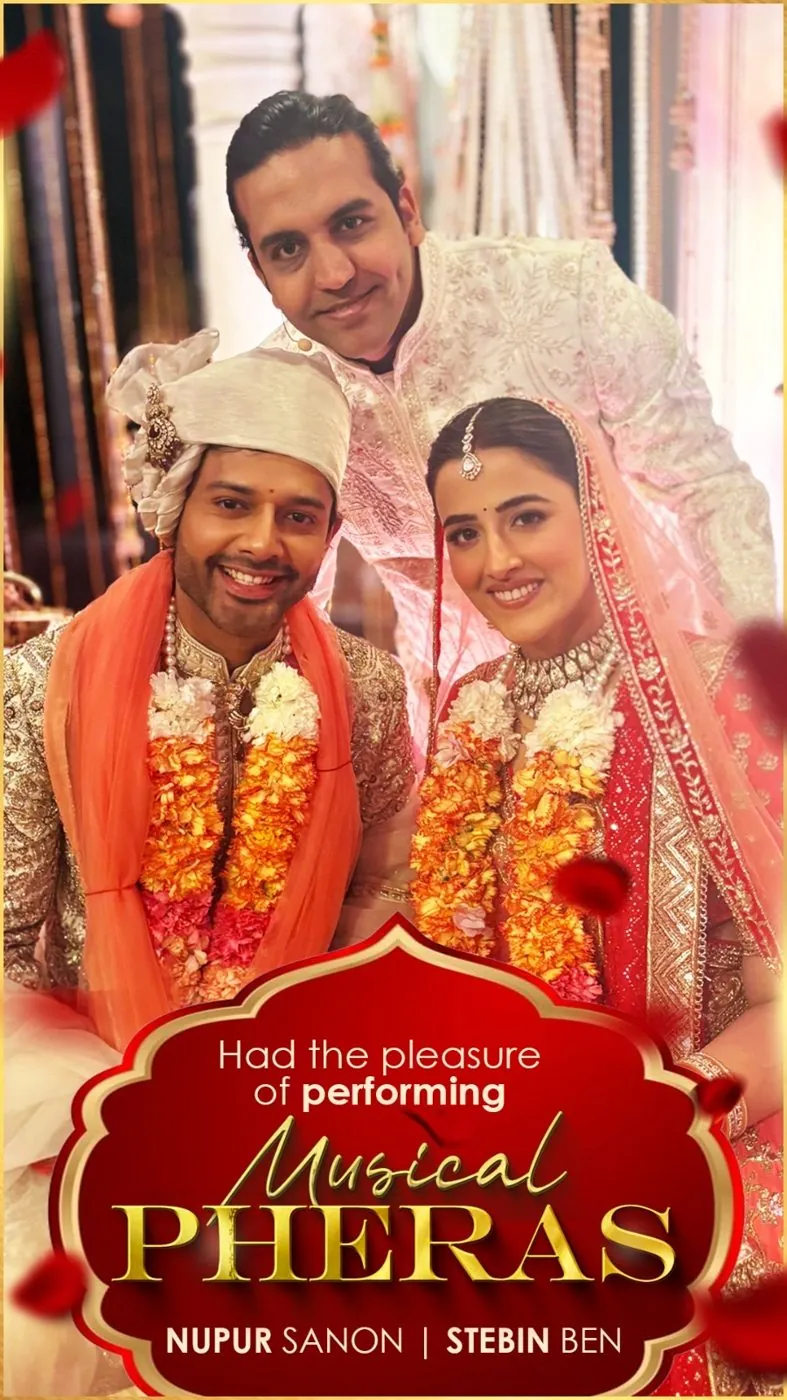
When Parineeti Chopra & Raghav Chadha took their vows, and when singer Stebin Ben married Nupur Sanon, the pheras were sung by the same voice. From palace lawns in Rajasthan to intimate home ceremonies, En-Chanting Pheras has become the quiet signature of India’s most celebrated weddings.
Recently sung atFairmont Udaipur · The Leela Palace Udaipur · Fairmont Jaipur · Taj Palace New Delhi · ITC Maurya · ITC Mughal Agra · Le Méridien Jaipur
Watch
Hear a vow being sung.
Good to know
- ✦
What are musical pheras?
Musical pheras are wedding pheras in which the vows are sung live. In En-Chanting Pheras, every vow is sung, every ritual is explained through story, and the whole mandap is held inside the music.
- ✦
How long does the ceremony take?
The ceremony takes about 45 to 60 minutes.
- ✦
Do we need a pandit ji, or can we bring our own?
You don’t need one. Ankit ji is trained in Vedic mantras and chants them himself, so the mantras, rituals and music stay perfectly in step. You are welcome to bring your own pandit ji too; he is briefed on how the ceremony will work. The words of the vows differ between families and regions, and the ceremony is shaped around your tradition.
- ✦
Are the traditional vows kept intact?
Yes. The seven vows keep their full traditional significance, and the storytelling adds to the ritual, never replaces it.
- ✦
Do you travel for destination weddings?
Yes. Recent pheras have been sung at Fairmont Udaipur, The Leela Palace Udaipur, Fairmont Jaipur, Taj Palace New Delhi, ITC Maurya, ITC Mughal Agra and Le Méridien Jaipur.
- ✦
Are Jain or Arya Samaj pheras offered?
Not at present. Jain and Arya Samaj pheras are currently not offered.
- ✦
Can the pheras be sung for an anniversary?
Yes. En-Chanting Pheras is also loved for anniversary pheras, with vows renewed at silver and golden jubilees.
Give your pheras their soundtrack
Share your wedding date and city. Availability is limited each season.